Recent meetings
A magnificent Gymanfa!
Sunday 1 March 2026
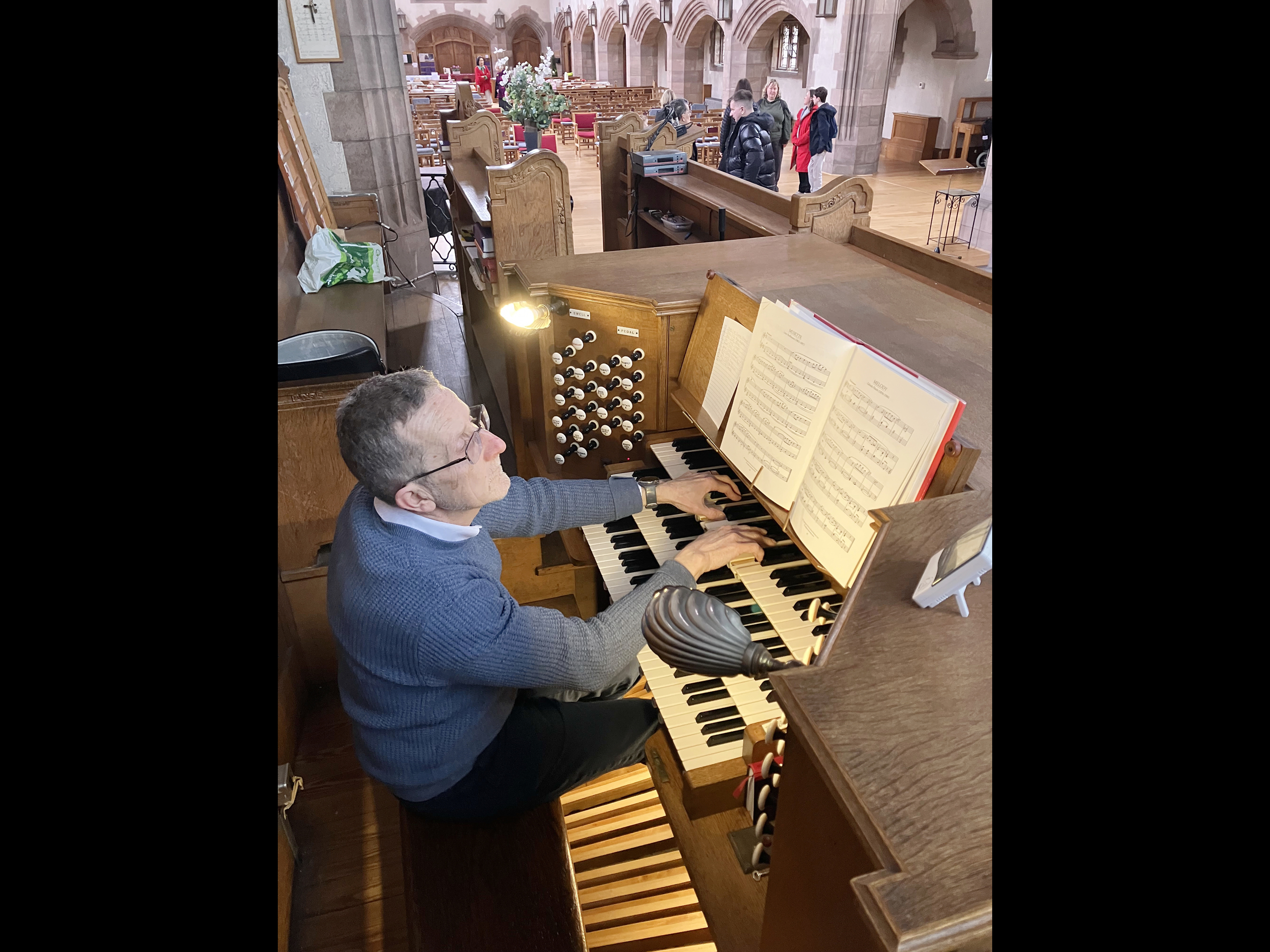 Seated one day at the organ ... Huw is waiting for the congregation to take their seats
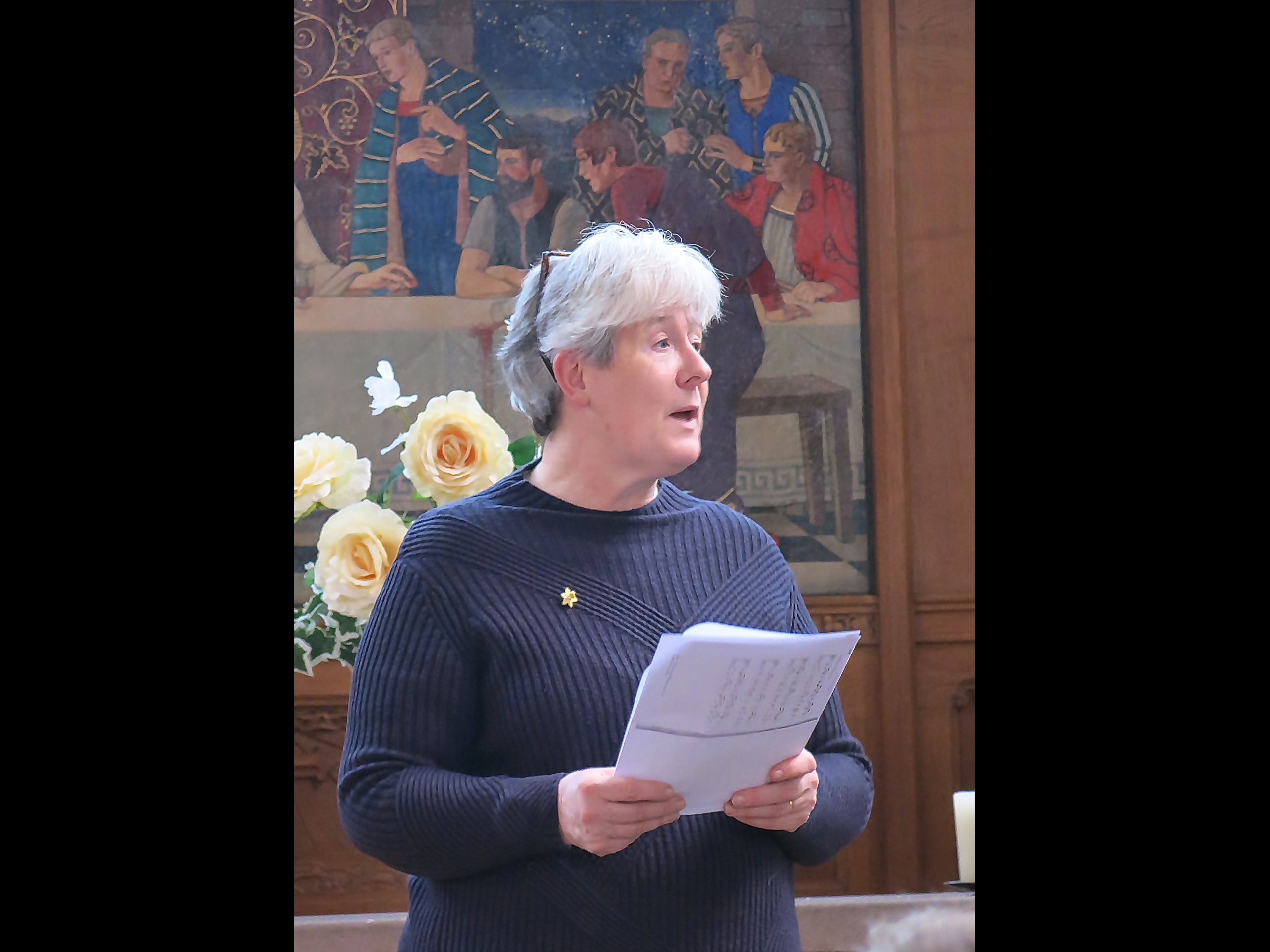
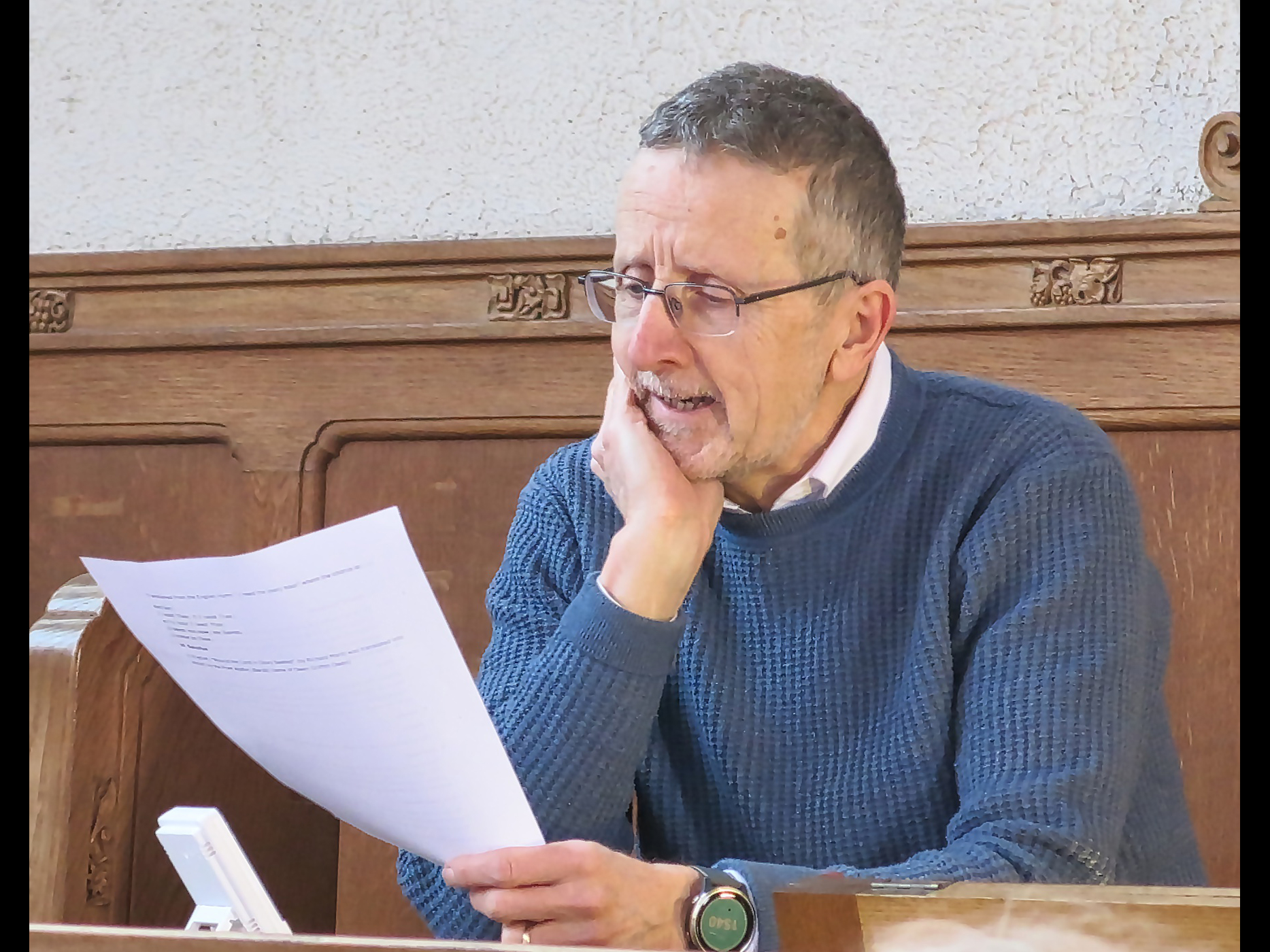
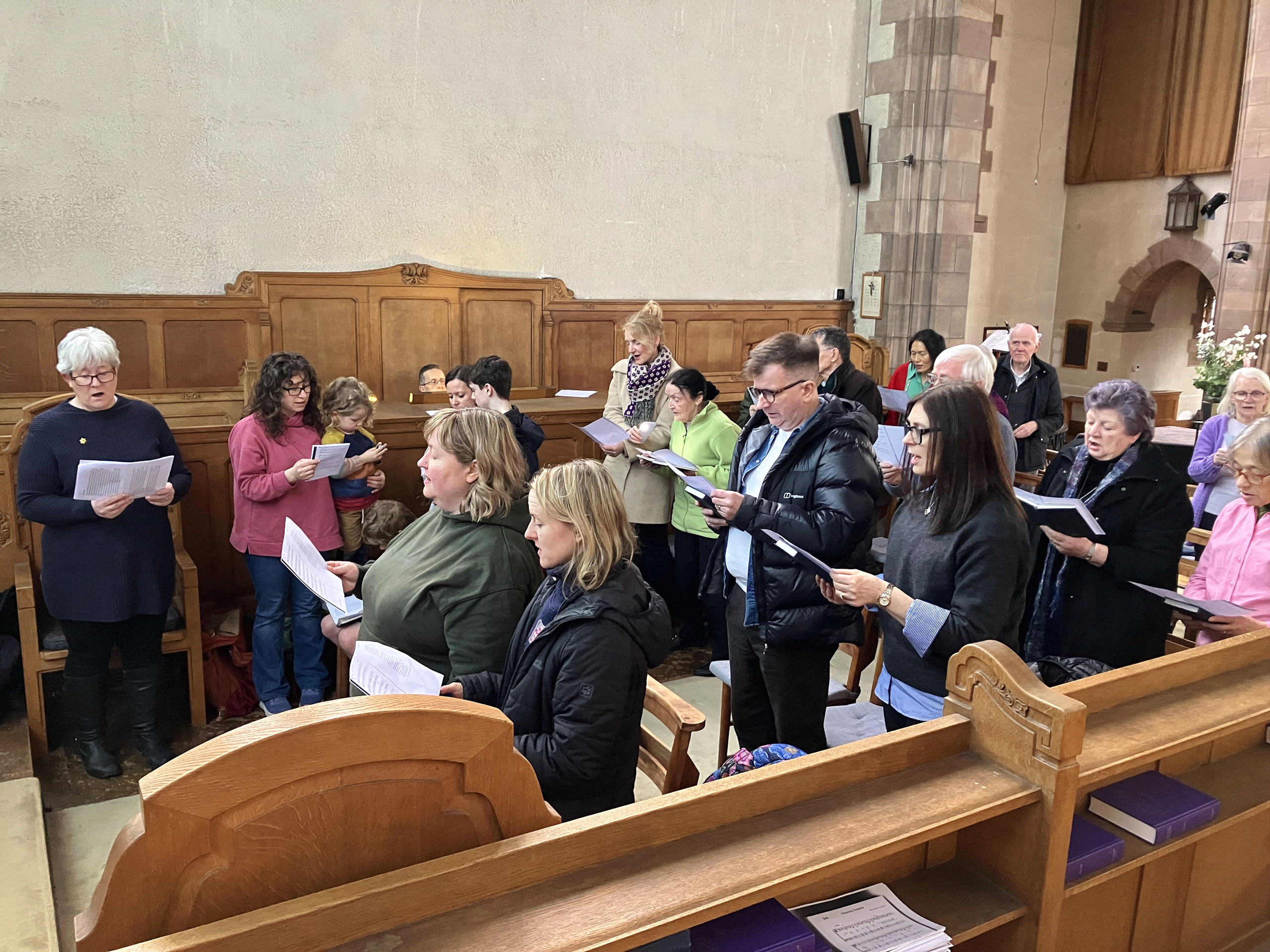
This year’s Gymanfa Ganu was different. Not only was it held on St David’s Day itself, but our venue was not the usual main hall, but the magnificent Reid Memorial Church itself, with accompaniment on organ rather than piano. Ably urged along by Huw Thomas on this magnificent three-manual instrument, we crowded into the space between the choir stalls and did our best to fill the enormous space. And it was more of a crowd than usual, with a welcome given to both some younger singers and newcomers who took up the challenge (for non-native speakers) of fitting the words to the tunes!
Once again, Huw and Janet Thomas had devised a programme of hymns introduced in an interesting and informative way. Janet started by saying something about our venue … widely recognised as a superb example of early twentieth-century church architecture in a neo-Perpendicular style. Leslie Grahame Thomson had planned the church, hall, manse, loggia and cloister as a single architectural composition, creating a peaceful, enclosed environment unusual for an urban Edinburgh parish.
We then learned about the church’s pipe organ by Rushworth & Dreaper which complements the building’s acoustics and contributes to its reputation as a space designed for both worship and high-quality music-making.
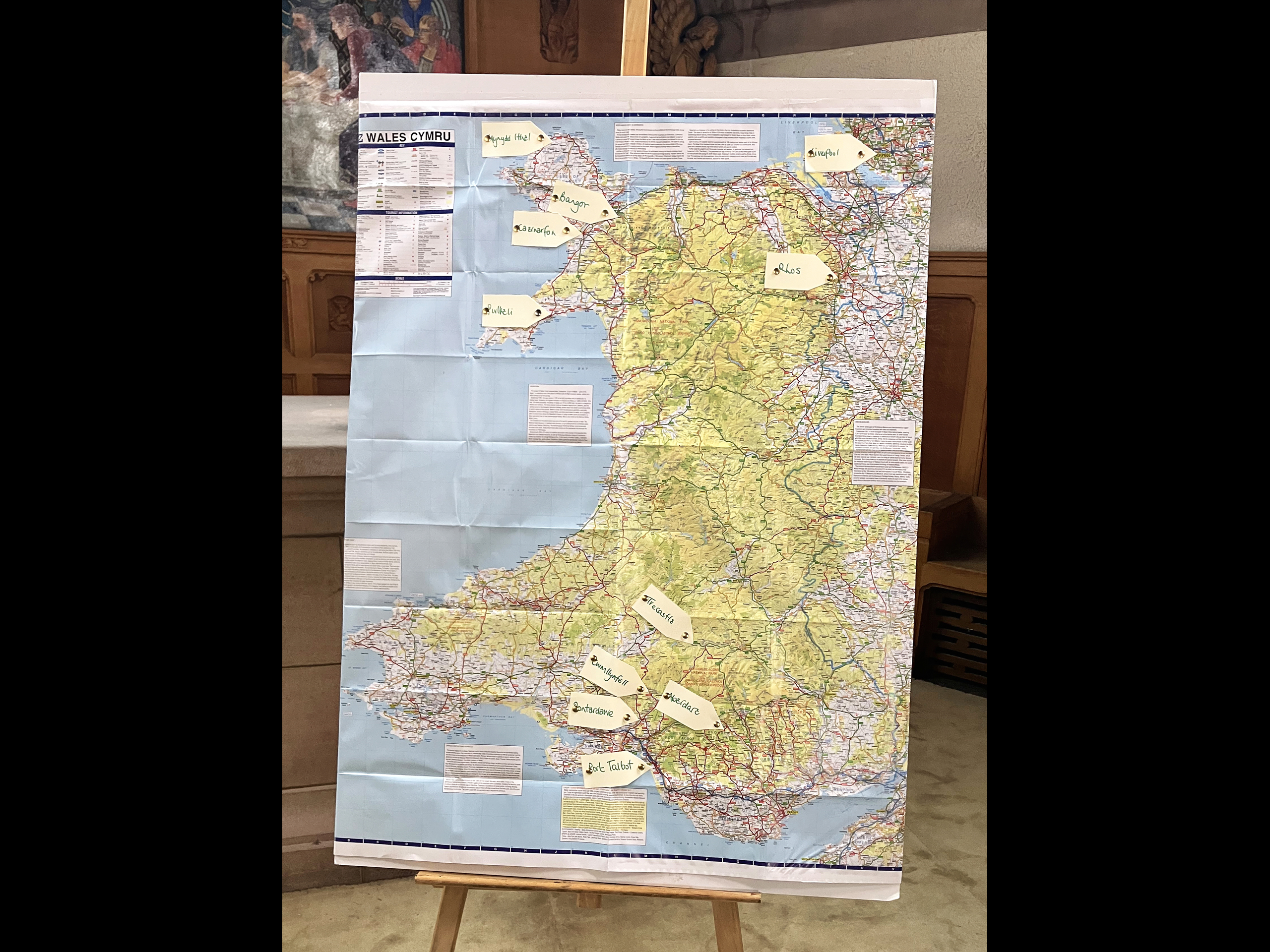
As last year we started with a map of Wales, but this time we were told about the towns and villages where the hymn writers were born or lived, and which surely must have provided inspiration for their work. This was our journey:
- Gweddi Wladgarol (“Cofia’n gwlad, Ben-llywydd tirion”)
tune by Caradog Roberts of Rhosllanerchrugog. - Bryn Myrddin (“Mawr oedd Crist yn nhragwyddoldeb”)
tune by John Morgan Nicholas of Port Talbot. - Ellers (“Fy Nhad a’m Duw, gad I mi weld dy wedd”)
words by Ben Davies of Cwmllynfell, a small community in the upper Swansea Valley. - Llanfair (“Caned nef a daear lawr”)
tune by Robert Williams of Mynydd Ithel, “a modest but historically resonant hill in eastern Anglesey, rising above the rural landscape near Llanerchymedd”. - Penlan (“In heavenly love abiding”)
tune by David Jenkins of Trecastle in Breconshire. - Ebenezer (“Dyma gariad fel y moroedd”)
tune by Thomas John Williams of Pontardawe, in the Swansea Valley. - Eleazar (“O na bawn I fel efe”)
words by Eleazar Roberts, born in Pwllheli, though he actually moved to Liverpool when 2 months old! The Welsh community in Liverpool has played a defining role in shaping the city’s character for more than two centuries. - Rhys (“Rho im yr hedd. na ŵyr y byd amdann”)
tune by William John Evans of Aberdare, in the Cynon Valley of South Wales. - Mae d’eisiau di bob awr (“I need thee every hour”)
words of Annie Sherwood Hawks (to a tune by Robert Lowry) translated by leuan Gwyllt (John Roberts) of Caernarfon. - Sanctus (“’Glan geriwbiaid a seraffiaid”)
tune by John Richards (‘Isalaw’) of Bangor.
At the end of our musical journey, Janet reminded us of two questions she’d asked at the beginning when sharing some statistics about the hymns sung recently.
- Which one of these hymns was the hymn that was on its fourth singing? (A. Sanctus)
- Which other one do you think we have sung four times? (A. Cwm Rhondda)
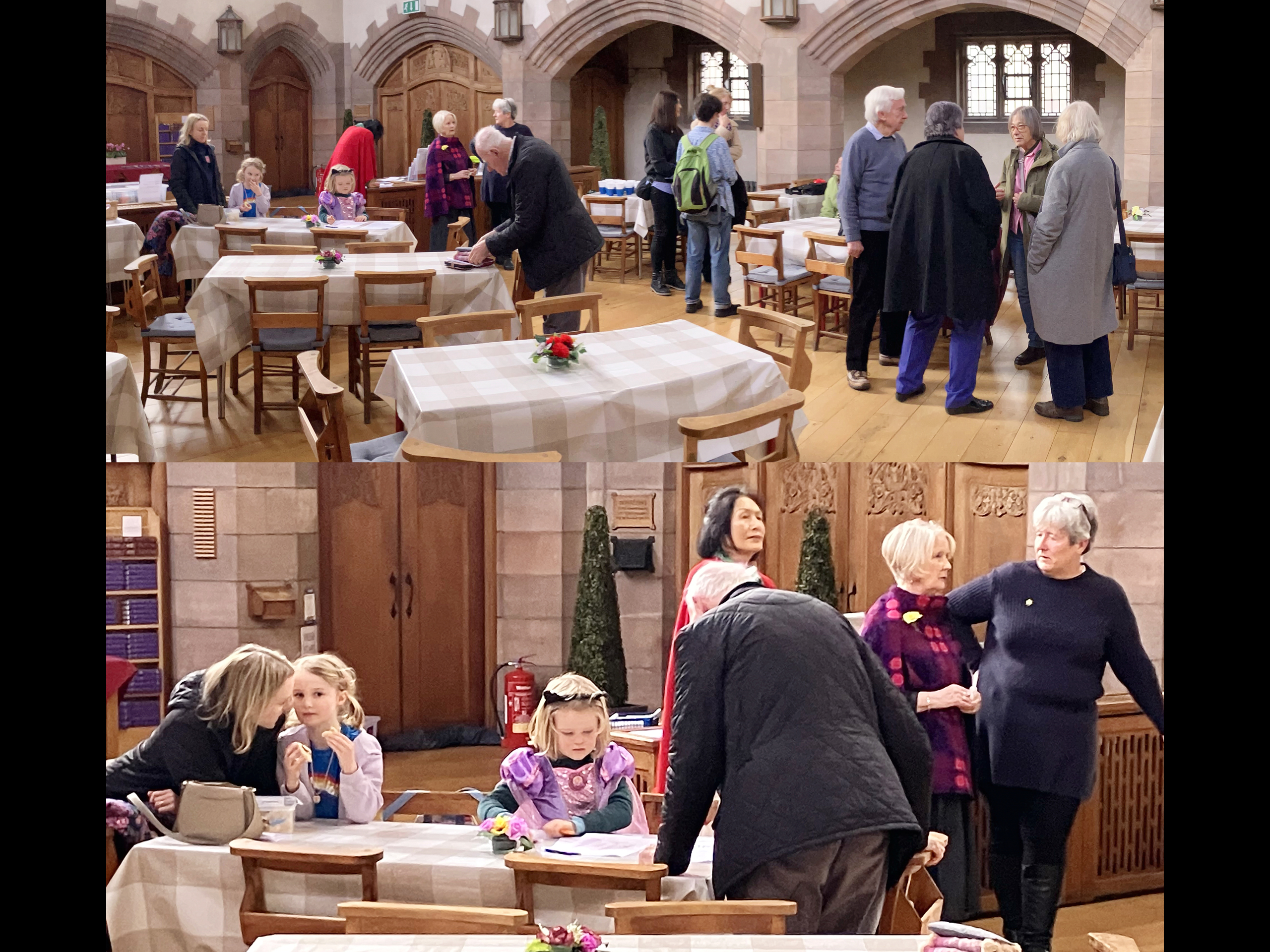
Our travels round the map reached the inevitable conclusion, the tea-trolley, this time in the spacious café area at the back of the Reid! Grateful thanks to everyone involved in a very pleasant afternoon.
If you’d like to read Janet’s script, which will tell you much more about the people and places, you can read or download it at this link.
St David’s Day dinner
Friday 27 February 2026
 Jennifer ticks them off as members gather …
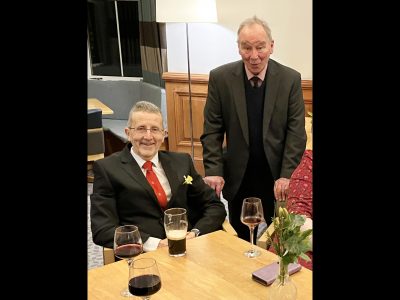
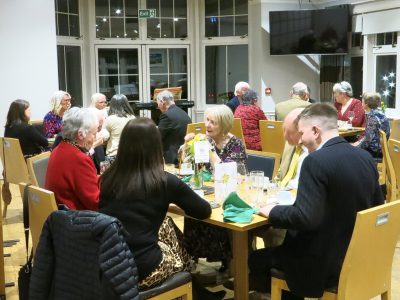
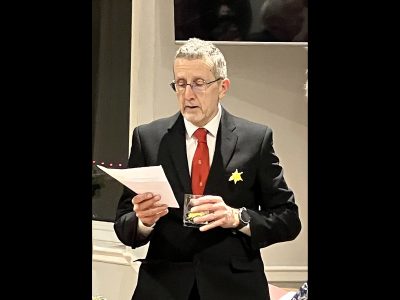
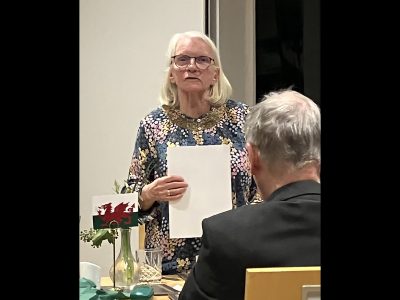
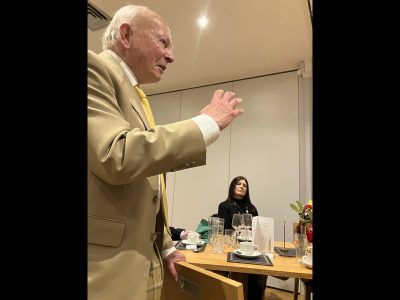
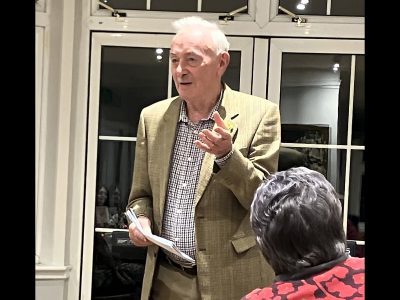
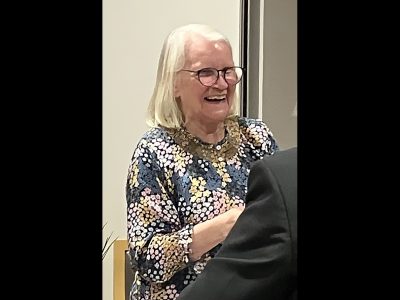
The group of members and friends that gathered at Mortonhall Golf Club for our 2026 St David’s Day dinner was smaller than usual, but the quality and variety of the food and conversation made up for the lack of numbers. Our President, David Hughes, had sent a “Kiaora” message from his travels, so it was our ever-energetic Secretary, Jennifer Welsher, who welcomed members before Margaret Brandie said Grace.
After an excellent dinner, Jennifer introduced her theme of “First impressions”, having invited several members to take the place of an external guest speaker by telling of their first experiences of the Society. Her own had resulted from a chance meeting at the school gate with Vice-President Valerie Baguley – “You need to join the Welsh Society” – which led to her attending a Noson Lawen at which Eirwen Stillie had brought her junior school class of girls in Welsh National costume to sing “Calon lân”. “We’ve arrived!” – the friendship from the Society had saved her life, and Jennifer soon joined the Committee and became Secretary in 1979.
Margaret Brandie had arrived in Edinburgh from Germany (where she’d met Chris) in 1995, but didn’t discover the Society for over ten years, when a chance encounter with Mary Davies on the bus to Portobello led to her attending a Gymanfa Ganu and meeting Ann Evans. She also recalled a Society visit to Edinburgh Zoo facilitated by Ross Poulter.
John Bowles had left Wales aged 8, and turned up in Edinburgh in 1979, but discovered the Society only five years ago. He too had found the Society very friendly, and had learnt more about Edinburgh as well as matters Welsh …
Hywel Williams’ father had been a member in the 1970s when lodging during the week in Newington, but it wasn’t until the 1990s that Hywel and Pam found us. And that despite a childhood in the Borders! He remembered the talks – Dan Evans on the Arctic; Pearl McCabe on the Senghenydd colliery disaster; Geoff Parkhouse on Ancrum – and the walks – Abbotsford House; Gilmerton Cove. He commented that all had been splendidly organised … never a shambles, thanks to Jennifer!
Jennifer rounded up the first impressions with a story about Dr Emrys Thomas, a distinguished and sober member. As a student he had attended a confinement in an Old Town tenement with a Welsh friend. It was a long confinement – they sent out for chips twice! – and grannie heard them chatting in their native tongue. “The doctors are talking Latin” she exclaimed!
It was then time for Huw Thomas to lead us in singing, naturally telling us quite a lot about the pieces in his introductions. We started with “Calon lân”, just about managed to get our tongues around an ever-faster “Oes gafr eto”, before tackling “Gwahoddiad”. We did less well with “Unwaith eto’n Nghmru annwyl”, a celebration following a return home to Wales, but its sentiments led appropriately to “Hen wlad fy nhadau”. There were then three well-deserved cheers for Jennifer before we headed off, after having spent another splendid evening together. “Lovely to have seen so many well-kent faces” as Hywel had put it.
Carol service and party
Sunday 7 December 2025
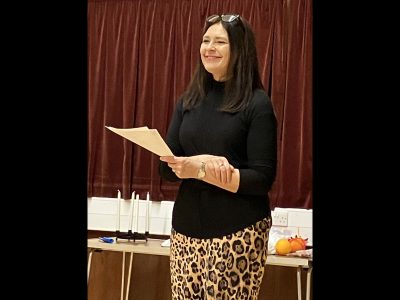 Margaret introducing the service
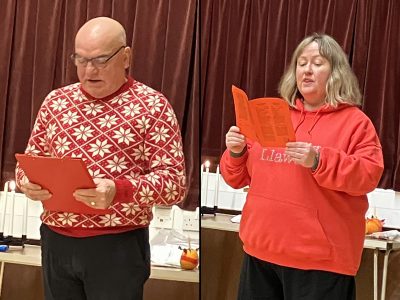
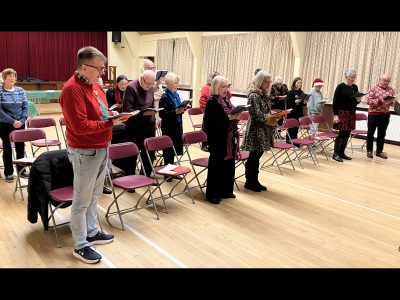
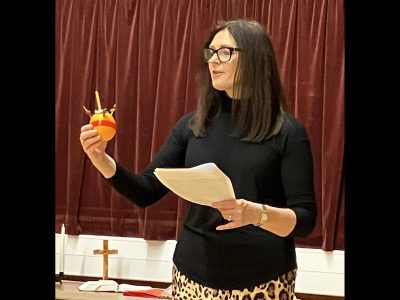
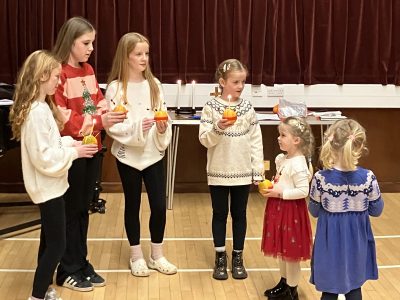
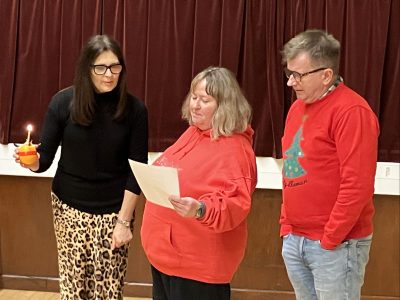
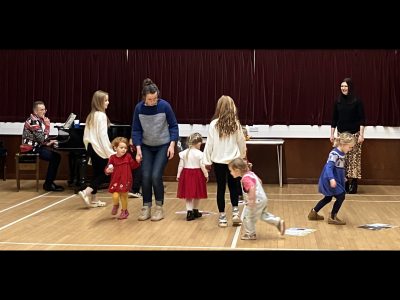
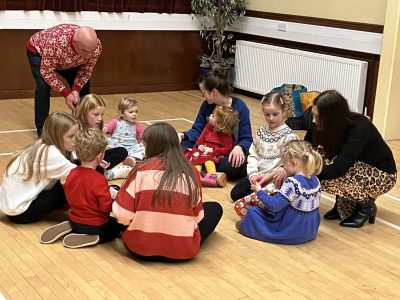
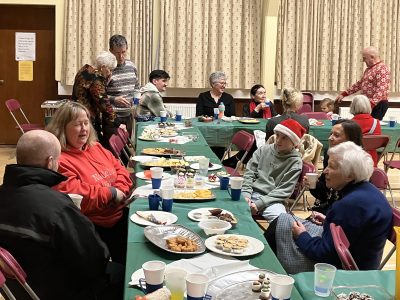
For many years our final meeting before Christmas has been a Christmas service, followed by a vestry tea, giving an opportunity both to sing and blether. This year we welcomed Llinos Jones and her friends, so there were young people playing around, to our delight.
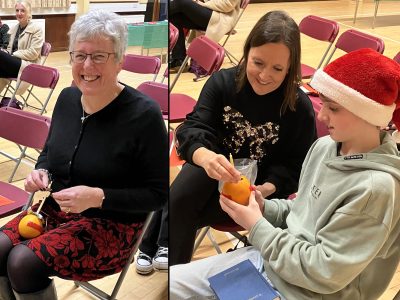
The service, led by Margaret Brandie, incorporated the making and lighting of Christingles. This Moravian tradition combines an orange, representing the world, a candle representing Jesus Christ as Light of the World, a red ribbon wrapped around the orange, representing the blood of Christ, and dried fruit skewered on cocktail sticks, representing the fruits of the earth and the four seasons.
Six years previously, we’d all been allowed to try our hand at making these visual aids … this year, the children showed us how it should be done! And of course there was the Welsh version of the Christingle hymn (read the words at this link), sung to the tune The Holly and the Ivy.
The five readings, in a mixture of Welsh and English, were helpfully accompanied by a service sheet giving the text in both languages and interleaved with hymns for the season to well-known tunes. We did our best with the singing … and it was fortunate that we weren’t asked to sing after the plentiful tea that followed.
Grateful thanks to those who took part, especially to Margaret Brandie for devising the service and marshalling the props. Thanks also to Huw Thomas for leading from the piano for both the hymns and the children’s games, to Jennifer Welsher, who organised the presents for the children, and to Lilian John who took charge of the refreshments.
St Andrew’s Day celebration
Friday 28 November 2025
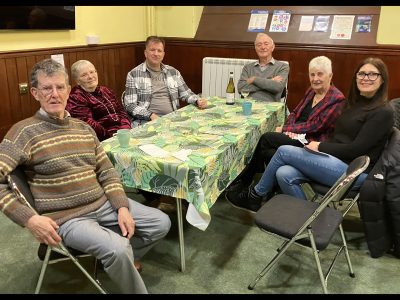 Members at Table West cleared for action!
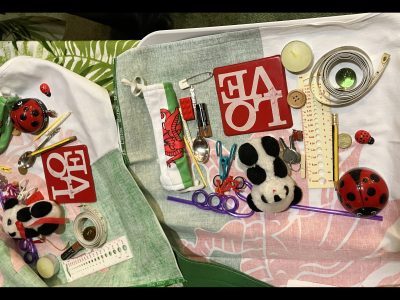
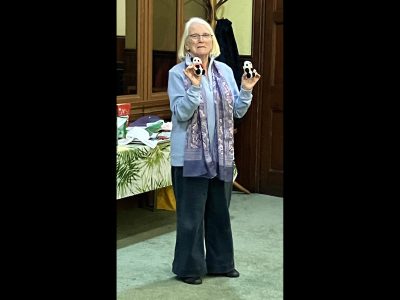
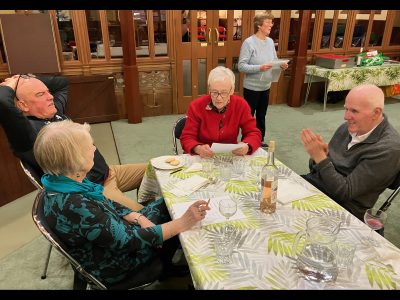
At the end of each November it’s been our custom to celebrate the Patron Saint of our host nation by sharing haggis, neeps and tatties and enjoying a mix of blether, quiz-type activities and singing. This year a number of “the usual suspects” were away, but our members very much enjoyed the evening.
David introduced Saint Andrew, and the plentiful food was then devoured at speed despite a high level of conversation. After Huw had reminded us why we here, Jennifer tested our short-term memories with Kim’s Game – thankfully a team effort, with both tables scoring 18/20 – and introduced us to two old friends who had lurked beneath the red dragons. Pamela then circulated a cryptic quiz, based on the names of garments, that caused much scratching of heads. Finally, David led our singing (“Flower of Scotland”; “Calon Lân”; “The Skye Boat Song”; “Sosban Fach”) before we sang “Hen Wlad Fy Nhadau” and headed home.
Grateful thanks to Lilian and her team for their catering efforts, to Priestfield Parish Church for the use of their premises and equipment, and to those who kept us informed and entertained.
Our 2024–25 season
Your webmaster thought it might be helpful to have a summary of the season as a separate post, rather than clutter the home page!
Meetings this year followed the familiar pattern, with a busy first half. A trip to Cockenzie with walk and lunch was followed by our usual Croeso evening, a Harvest thanksgiving service, a St Andrew’s Night supper party, and on 8 December a service of carols and lessons, followed by vestry tea and a children’s party. In the New Year we much enjoyed a Chinese Evening at Priestfield on Friday 7 February, and our annual St David’s Day dinner was held at Mortonhall Golf Club on Friday 7 March, followed by a Gymanfa Ganu the following Sunday. Click the links for reports on some of these, or scroll down our Recent Meetings page.