A magnificent Gymanfa!
Sunday 1 March 2026
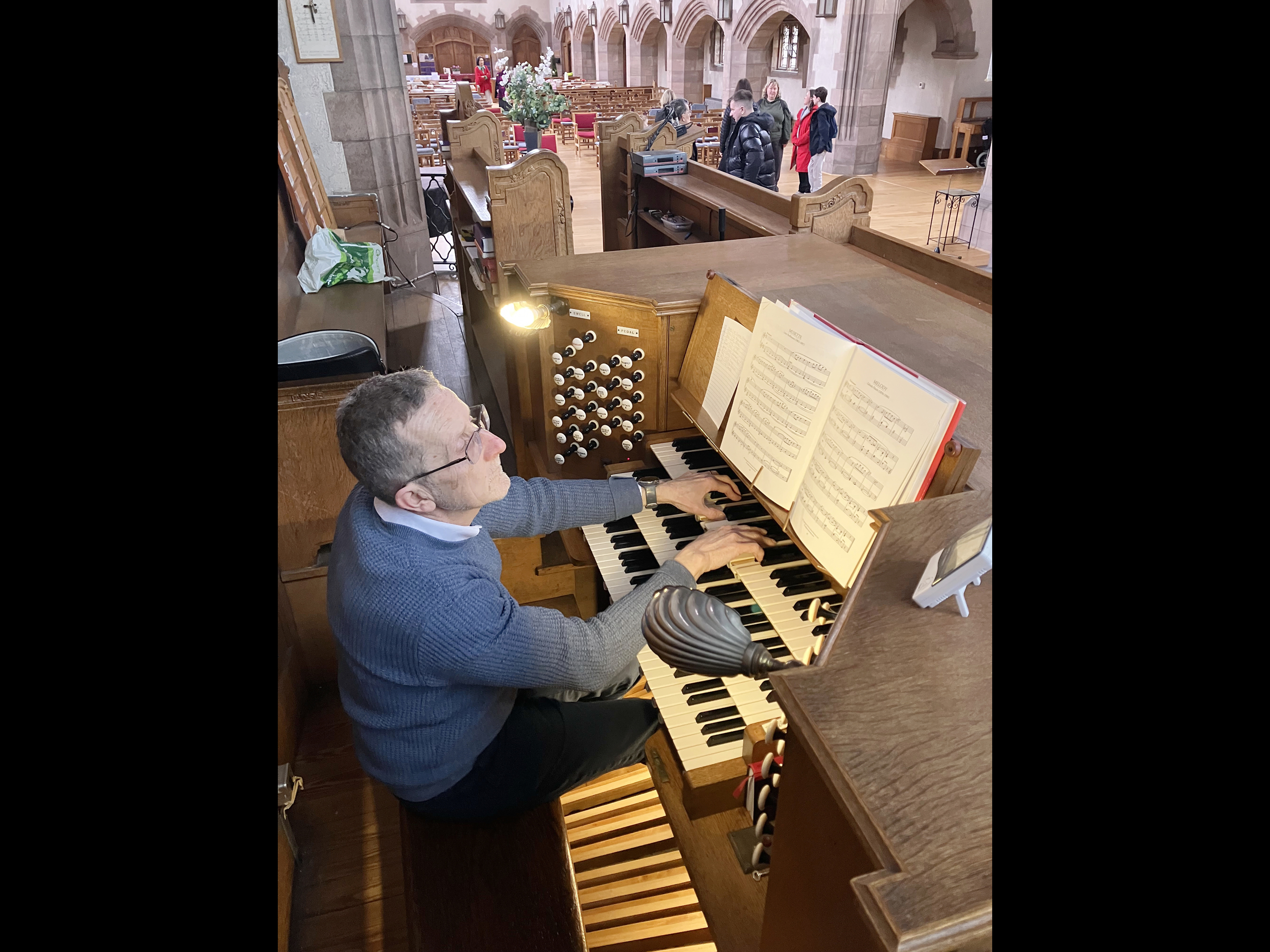 Seated one day at the organ ... Huw is waiting for the congregation to take their seats
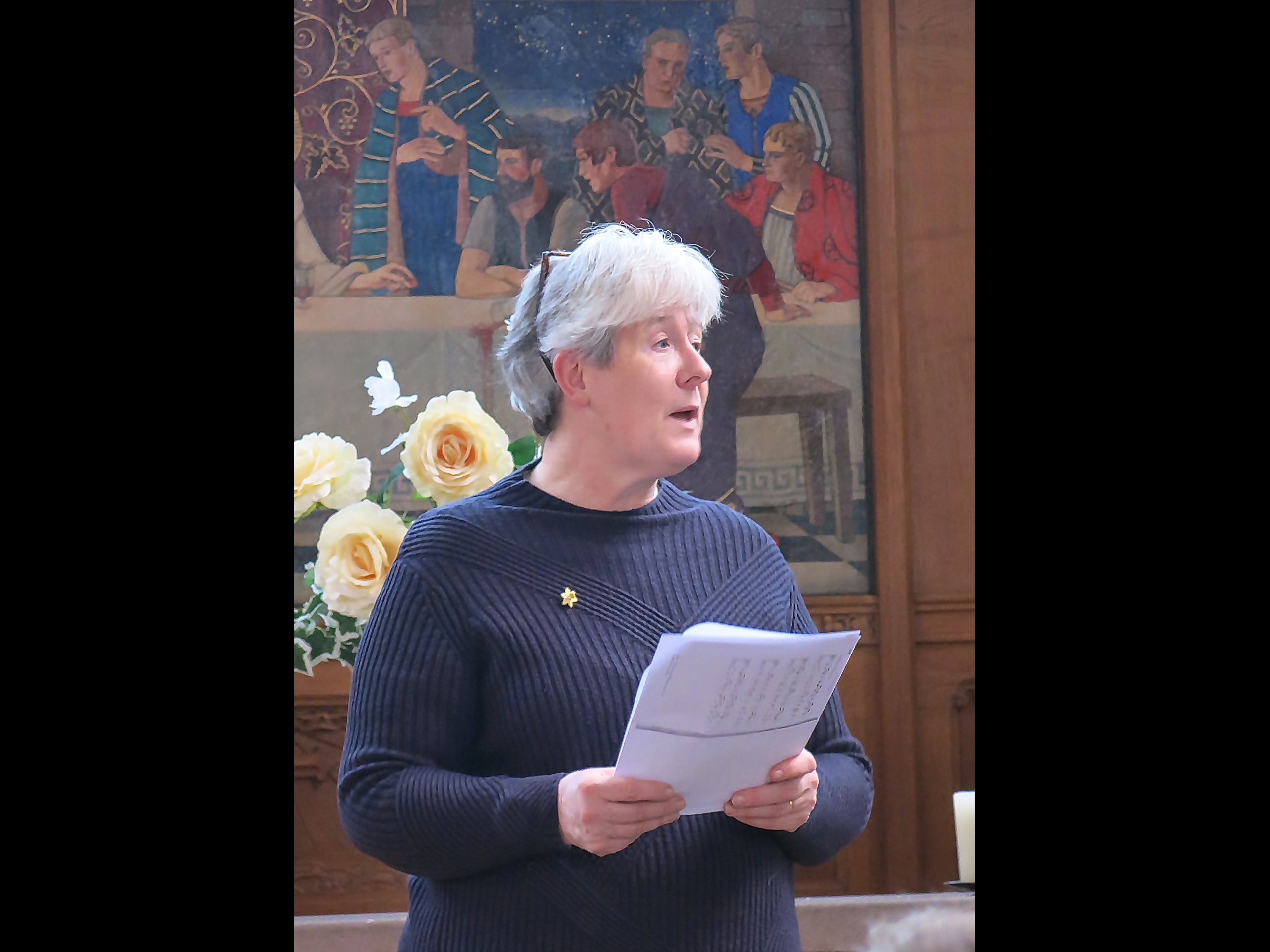
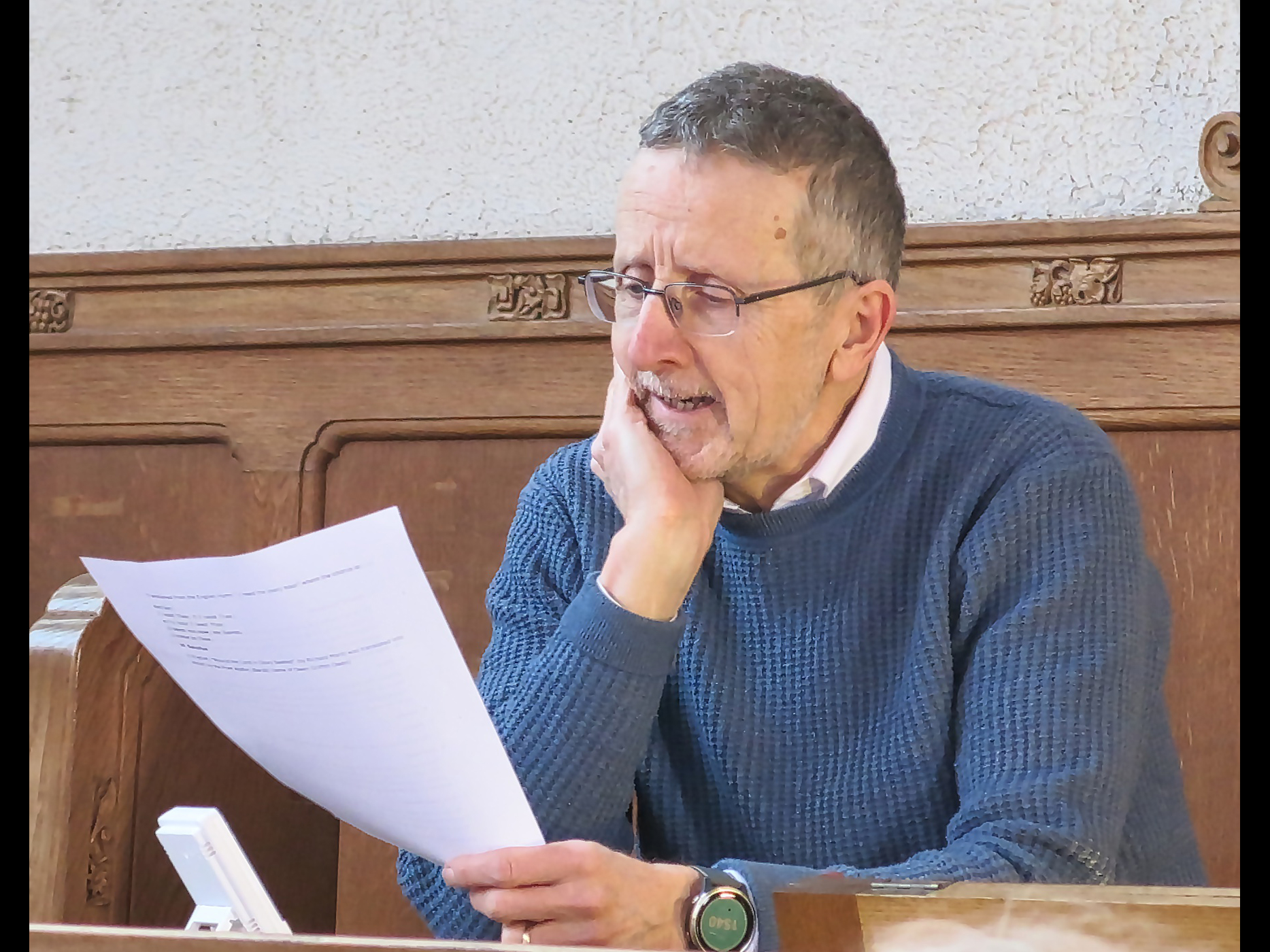
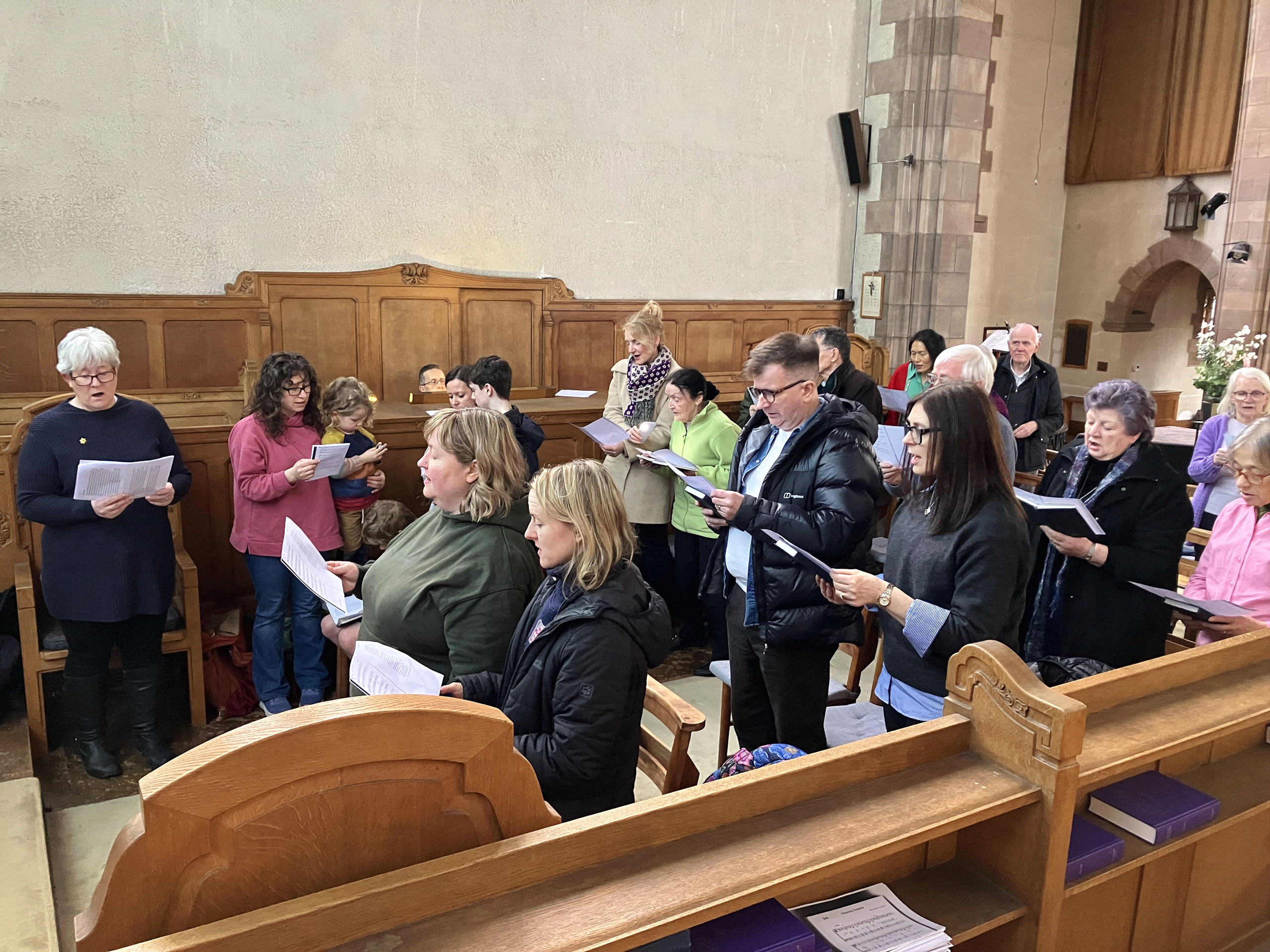
This year’s Gymanfa Ganu was different. Not only was it held on St David’s Day itself, but our venue was not the usual main hall, but the magnificent Reid Memorial Church itself, with accompaniment on organ rather than piano. Ably urged along by Huw Thomas on this magnificent three-manual instrument, we crowded into the space between the choir stalls and did our best to fill the enormous space. And it was more of a crowd than usual, with a welcome given to both some younger singers and newcomers who took up the challenge (for non-native speakers) of fitting the words to the tunes!
Once again, Huw and Janet Thomas had devised a programme of hymns introduced in an interesting and informative way. Janet started by saying something about our venue … widely recognised as a superb example of early twentieth-century church architecture in a neo-Perpendicular style. Leslie Grahame Thomson had planned the church, hall, manse, loggia and cloister as a single architectural composition, creating a peaceful, enclosed environment unusual for an urban Edinburgh parish.
We then learned about the church’s pipe organ by Rushworth & Dreaper which complements the building’s acoustics and contributes to its reputation as a space designed for both worship and high-quality music-making.
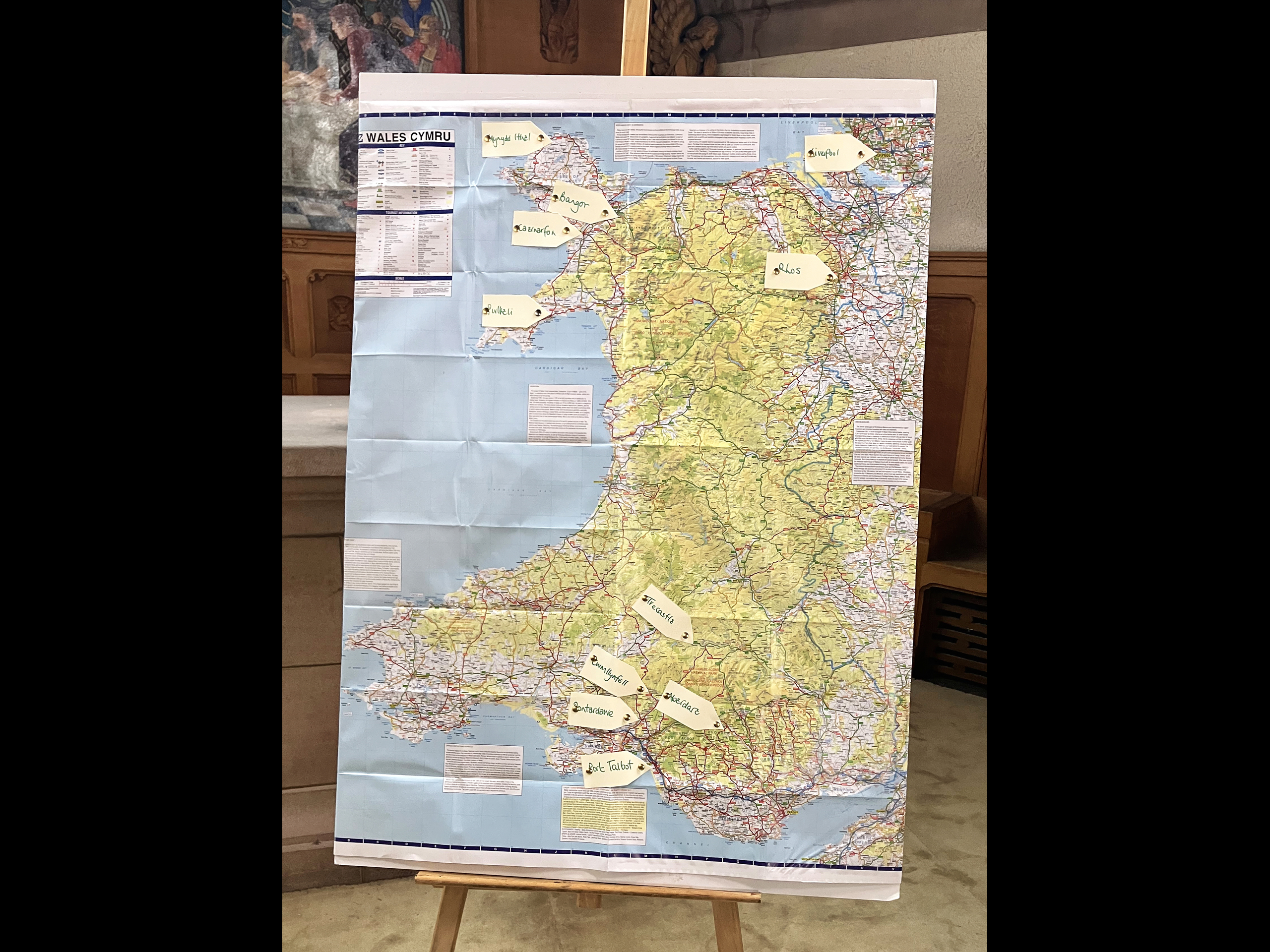
As last year we started with a map of Wales, but this time we were told about the towns and villages where the hymn writers were born or lived, and which surely must have provided inspiration for their work. This was our journey:
- Gweddi Wladgarol (“Cofia’n gwlad, Ben-llywydd tirion”)
tune by Caradog Roberts of Rhosllanerchrugog. - Bryn Myrddin (“Mawr oedd Crist yn nhragwyddoldeb”)
tune by John Morgan Nicholas of Port Talbot. - Ellers (“Fy Nhad a’m Duw, gad I mi weld dy wedd”)
words by Ben Davies of Cwmllynfell, a small community in the upper Swansea Valley. - Llanfair (“Caned nef a daear lawr”)
tune by Robert Williams of Mynydd Ithel, “a modest but historically resonant hill in eastern Anglesey, rising above the rural landscape near Llanerchymedd”. - Penlan (“In heavenly love abiding”)
tune by David Jenkins of Trecastle in Breconshire. - Ebenezer (“Dyma gariad fel y moroedd”)
tune by Thomas John Williams of Pontardawe, in the Swansea Valley. - Eleazar (“O na bawn I fel efe”)
words by Eleazar Roberts, born in Pwllheli, though he actually moved to Liverpool when 2 months old! The Welsh community in Liverpool has played a defining role in shaping the city’s character for more than two centuries. - Rhys (“Rho im yr hedd. na ŵyr y byd amdann”)
tune by William John Evans of Aberdare, in the Cynon Valley of South Wales. - Mae d’eisiau di bob awr (“I need thee every hour”)
words of Annie Sherwood Hawks (to a tune by Robert Lowry) translated by leuan Gwyllt (John Roberts) of Caernarfon. - Sanctus (“’Glan geriwbiaid a seraffiaid”)
tune by John Richards (‘Isalaw’) of Bangor.
At the end of our musical journey, Janet reminded us of two questions she’d asked at the beginning when sharing some statistics about the hymns sung recently.
- Which one of these hymns was the hymn that was on its fourth singing? (A. Sanctus)
- Which other one do you think we have sung four times? (A. Cwm Rhondda)
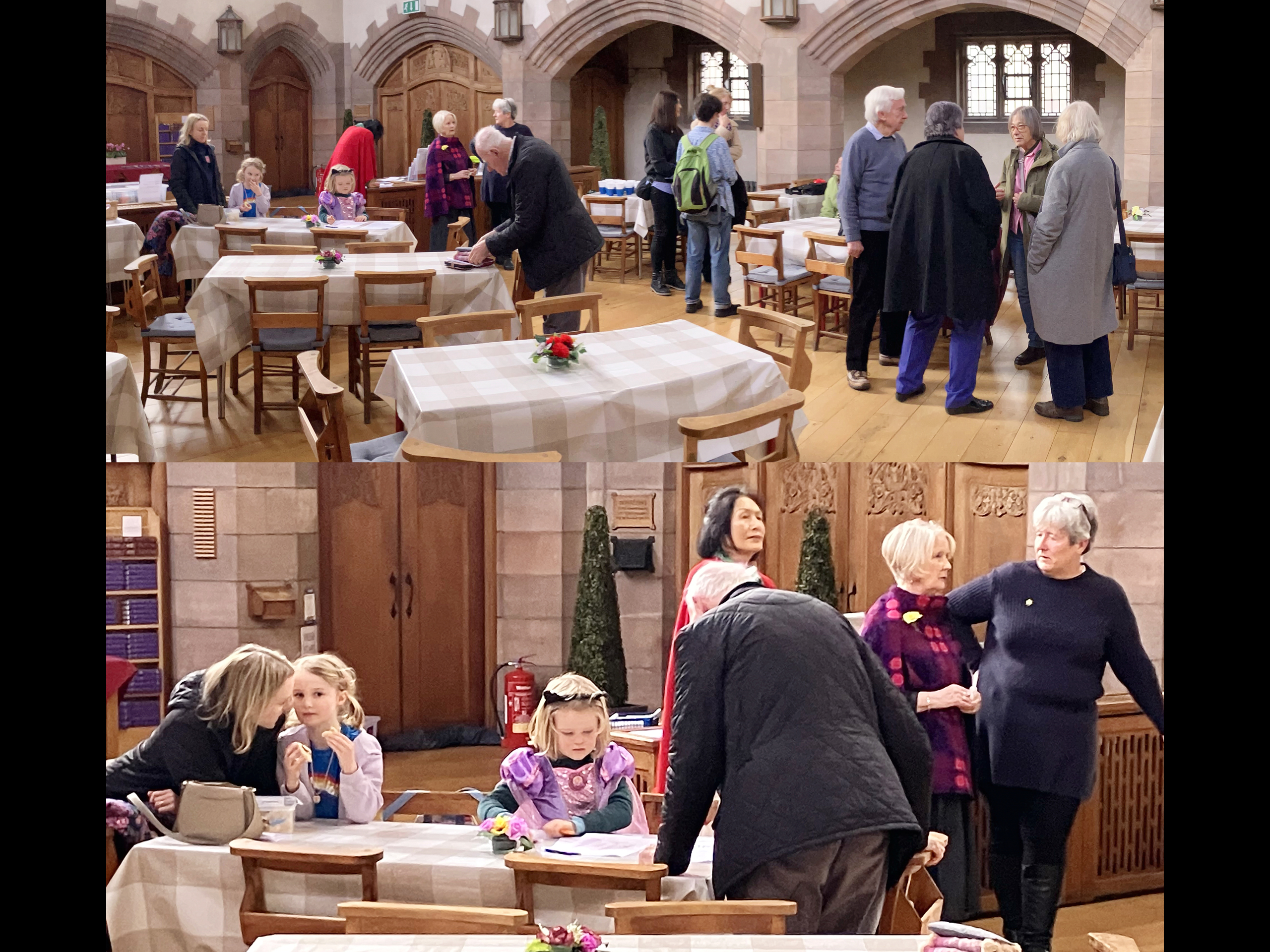
Our travels round the map reached the inevitable conclusion, the tea-trolley, this time in the spacious café area at the back of the Reid! Grateful thanks to everyone involved in a very pleasant afternoon.
If you’d like to read Janet’s script, which will tell you much more about the people and places, you can read or download it at this link.